From the Renaissance to the age of technology: how Vogue World 2026 unfolded
As part of Milan Fashion Week
The fifth edition of Vogue World took place in Milan the night before, celebrating Italian fashion, craftsmanship and technology. For one evening, the historic Galleria Vittorio Emanuele II was transformed into a runway where the archives of legendary fashion houses met contemporary collections, opera, ballet, cinema and innovation. The event opened Milan Fashion Week for the Spring/Summer 2027 season.
The concept of Vogue World: Milano was structured around five acts, each representing a distinct stage in the evolution of Italian culture and fashion – from the craftsmanship of the Renaissance to the technologies of the future.
Посмотреть эту публикацию в Instagram
From the Renaissance to the Future
The first act – The Artisanal Revolution – was dedicated to Italian craftsmanship. Brocade, lace, ornate detailing and handwork evoked an era when art, craftsmanship and invention were closely intertwined. The segment opened with Gigi Hadid wearing a Valentino Haute Couture look from Alessandro Michele’s Spring/Summer 2025 collection. The dress was made from recycled Venetian blankets and took 1,680 hours to create.
Посмотреть эту публикацию в Instagram
The second act – The Industrial Revolution – transported the audience to Turin, one of the centres of Italian industry and automobile manufacturing. Decorative elements gave way to sharp silhouettes, monochromatic fabrics and meticulously crafted wool materials.
The third part – Made in Italy – turned to the cinematic image of Italy and the era of La Dolce Vita. Key references included the films of Federico Fellini and the iconic image of the Italian film diva.
Посмотреть эту публикацию в Instagram
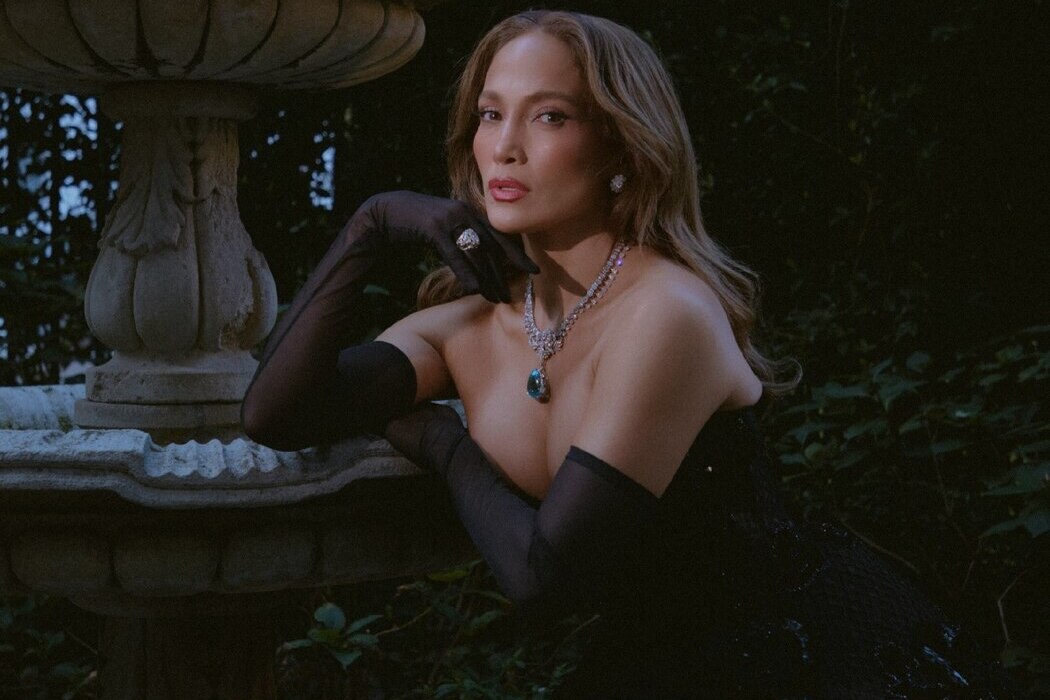
During the third act, Italian tennis player Lorenzo Musetti led Jennifer Lopez from the audience onto the runway. Her appearance referenced a scene from Federico Fellini’s «La Dolce Vita», in which Anita Ekberg, playing Sylvia, dances in the Trevi Fountain.
Посмотреть эту публикацию в Instagram
Other participants in this act included Cardi B in a vintage Versace dress from the Spring/Summer 2018 collection, tennis player Aryna Sabalenka in Gucci and actress Simone Ashley.
Посмотреть эту публикацию в Instagram
The fourth act – The Age of Intelligence – brought traditional craftsmanship into dialogue with technology. The focus was on innovative and sustainable materials capable of responding to temperature, movement and environmental conditions. This was also the segment in which MGK – Machine Gun Kelly – appeared in a Byblos look, while robotic performers joined the staging.
Посмотреть эту публикацию в Instagram
The final, fifth act – The Imagination Revolution – transported the show into an imagined future. Here, Italian heritage became a starting point for new experiments and a rethinking of what the fashion of tomorrow might look like.
Посмотреть эту публикацию в Instagram
Fashion, Opera and Ballet
Vogue World went beyond a traditional fashion show. Teatro alla Scala and Accademia Teatro alla Scala took part in the event, while musical and theatrical elements were integrated directly into the production.
One of the highlights was a performance by Roberto Bolle, one of Italy’s best-known ballet dancers. He served as a performance consultant and lead dancer for the show, while the choreography for his interlude was created by Laccio.
Посмотреть эту публикацию в Instagram
Alicia Keys brought Vogue World to a close. She appeared at the piano in the centre of the Galleria Vittorio Emanuele II and performed «I Feel Love» by Donna Summer. For the performance, the singer wore a dress by Bureau of Imagination – a collaborative project by Francesco Risso and Alex Soss. The look was made from fragments of satin, chiffon, georgette and crêpe de Chine, joined with threads and beads.
Посмотреть эту публикацию в Instagram
Which Brands Were Featured at Vogue World
The production featured looks from numerous Italian fashion houses – from Valentino, Prada and Gucci to Giorgio Armani, Versace, Ferragamo, Bottega Veneta, Dolce & Gabbana and others.
Посмотреть эту публикацию в Instagram
One of the defining features of the production was its combination of different periods in the history of Italian fashion: archival pieces, current collections and specially created looks all appeared on the runway.
Посмотреть эту публикацию в Instagram
The cast included not only professional models, but also musicians, actors and athletes. Alongside Gigi Hadid, Jennifer Lopez, Cardi B and Alicia Keys, the runway featured Ashley Graham, J Balvin in Dolce & Gabbana, Sam Claflin, Iris Law, Madelaine Petsch, EJAE – the vocalist known for the soundtrack to KPop Demon Hunters – Jeremy Pope, Levi McConaughey, Matteo Bocelli, Adria Arjona and Simone Tabasco, among others.
Посмотреть эту публикацию в Instagram
Vittoria Ceretti also deserves special mention. The Italian model took part in the first act, walking the runway in an archival Valentino Haute Couture dress. For the final Vogue World: Milano look, she wore a custom Prada creation by Miuccia Prada and Raf Simons.
Посмотреть эту публикацию в Instagram
Among the celebrities who attended the event but did not take part in the show itself were Dakota Johnson, Naomi Campbell and others.
Посмотреть эту публикацию в Instagram
Who Created Vogue World: Milano
An international Vogue team worked on the production. Juan Costa Paz served as Creative Director, while Francesca Razzi, Vogue Italia’s Head of Content, oversaw the editorial direction. The fashion component was led by Lady Amanda Harlech. Peter Alouan was responsible for Styling Direction, while Luca Galasso served as Fashion Director for special performers and casting.
Посмотреть эту публикацию в Instagram
The choreography was created by Charm La’Donna.
Посмотреть эту публикацию в Instagram
The event was held under the patronage of the City of Milan and the Camera Nazionale della Moda Italiana.
Milan as the Main Character
The central character of Vogue World: Milano, however, was neither an individual designer nor a celebrity, but Milan itself.
The event took place at the Galleria Vittorio Emanuele II – the historic glass arcade in the heart of the city, located between the Duomo and Teatro alla Scala. Here, Vogue created a space in which 19th-century architecture became part of a contemporary fashion production.
Посмотреть эту публикацию в Instagram
Across five acts, Vogue explored different stages in the evolution of Made in Italy – from Renaissance craftsmanship and handwork to the Industrial Revolution, cinema, modern technology and an imagined future.
At the heart of the concept was a question about how the role of human craftsmanship might evolve in the age of artificial intelligence. Vogue proposed viewing technology not as the opposite of craftsmanship, but as a new tool for creativity and experimentation. This is why «craftsmanship and the human touch» became the central motif of the show.
Посмотреть эту публикацию в Instagram
Vogue thus opened Milan Fashion Week not with a traditional presentation by a single fashion house, but with a large-scale theatrical production exploring the past, present and future of Italian fashion – from the Renaissance workshop to the technological laboratory.
Cover photo: Instagram @jlo