Guaranteed goosebumps: 5 iconic Alfred Hitchcock scenes that made film history
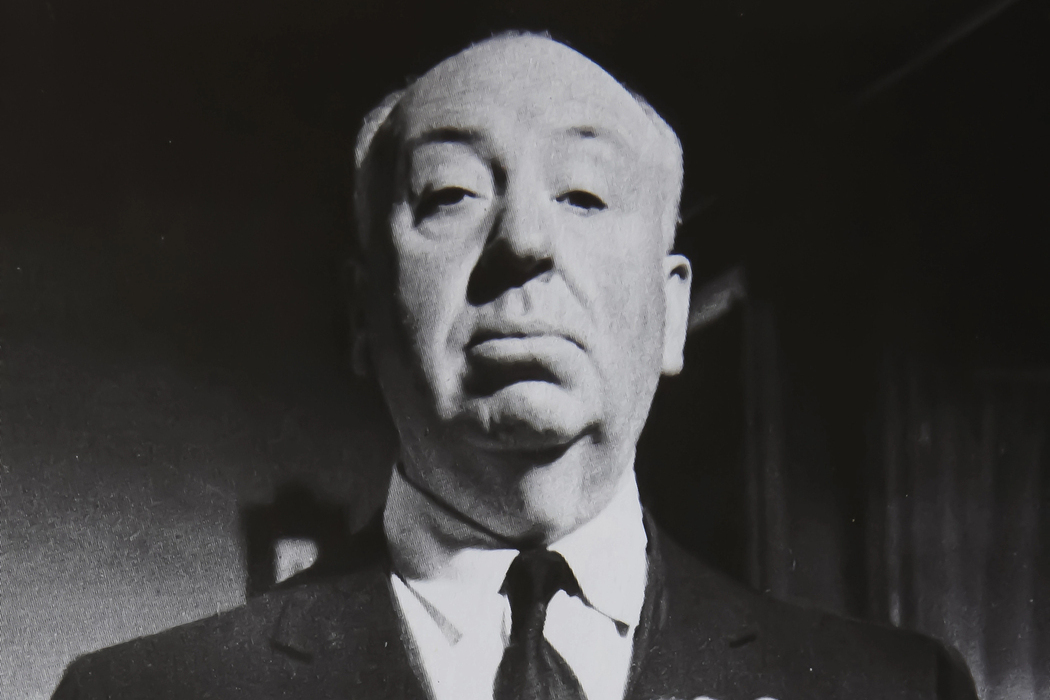
Marking the 127th anniversary of the King of Suspense
Alfred Hitchcock was born on August 13, 1899 — the director who taught audiences to fear the most ordinary things: a neighbor’s window, a flock of birds, a motel shower, or an airplane in the sky.
Hitchcock was a master at directing the audience’s attention and creating tension where seemingly nothing was happening at all. He experimented with editing, camera angles, sound, and camera movement — techniques that filmmakers continue to use to this day.
To mark the director’s birthday, INSIDER.AT looks back at five of the most famous scenes from his films.
«Psycho», 1960 — the shower scene
Even those who have never seen «Psycho» will most likely recognize this scene. Marion Crane, played by Janet Leigh, is taking a shower in a motel when the silhouette of a figure holding a knife suddenly appears behind the curtain.
The attack itself lasts only about 45 seconds, yet it took an entire week to film. The sequence involved 78 camera setups and 52 cuts. Hitchcock creates the sense of brutality primarily through rapid-fire editing, close-ups, and Bernard Herrmann’s piercing score.
The sequence became one of the most recognizable in cinema history, while the shrieking strings became virtually synonymous with danger on screen.
«Vertigo», 1958 — looking down
In «Vertigo», Hitchcock wanted to do more than simply show his protagonist’s fear of heights — he wanted the audience to experience it with him.
To achieve this, he used a technique that would later become known as the dolly zoom: the camera moves in one direction while the lens’s focal length changes in the opposite direction, making the perspective appear to compress or stretch.
The effect became a visual signature of «Vertigo» and later one of the most recognizable techniques in filmmaking. It was subsequently used by directors including Steven Spielberg in «Jaws» and Martin Scorsese in «Goodfellas».
«North by Northwest», 1959 — an airplane in the middle of nowhere
Cary Grant stands alone in a deserted landscape. There is almost nothing around him — and seemingly nothing to fear.
Until an airplane suddenly appears in the sky.
Instead of the dark street or sinister alleyway traditionally associated with thrillers, Hitchcock brings danger into broad daylight — into a completely open space. The plane begins pursuing the protagonist, and the empty landscape instantly turns into a trap.
It was precisely this contrast that made the sequence one of the most recognizable of Hitchcock’s career.
«The Birds», 1963 — the birds outside the school
Melanie Daniels, played by Tippi Hedren, sits on a bench outside a school. Behind her is a playground.
At first, a single bird lands on the climbing frame. Then a few more appear. Melanie remains unaware of what is happening directly behind her. By the time she finally turns around, the playground is already filled with birds.
Hitchcock turns anticipation itself into the main source of fear: the audience notices the danger before the protagonist does and can do nothing about it — all they can do is wait.
«Strangers on a Train», 1951 — the tennis match
In the stands, dozens of spectators follow the tennis ball in unison: their heads move left — right, left — right.
Everyone except one man.
Bruno Anthony, played by Robert Walker, stares straight ahead without moving. This simple visual contrast is all Hitchcock needs to create a sense of unease: while everyone else is watching the game, Bruno is watching someone else entirely.
No chase scenes, no special effects — just one motionless gaze amid dozens of heads moving in unison. A simple yet flawless example of Hitchcockian suspense.
Hitchcock repeatedly explained the fundamental difference between surprise and suspense. A sudden danger produces a brief shock. But when the audience knows about the threat in advance, anticipation begins — and that is precisely where tension is born.
Perhaps that is why Hitchcock’s films continue to have such a powerful effect even decades later. We know perfectly well that the knife is about to appear, the airplane is about to swoop in, or a flock of birds is gathering behind the protagonist.
And we keep watching anyway.
Photo: depositphotos